| Amit Shah lands in Leh, LBA steps up attack on Cong | |    | 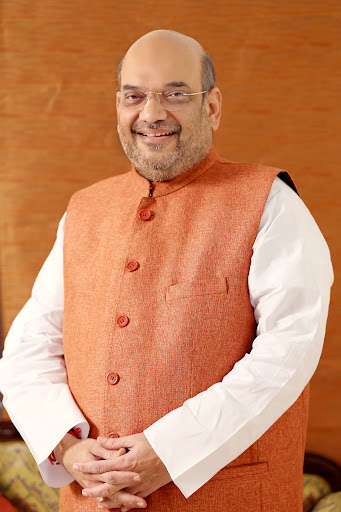 Early Times Report Early Times Report
Jammu, Apr 30: The political temperature in Ladakh rose sharply on Thursday as sections of the Ladakh Buddhist Association intensified their attack on the Congress, coinciding with the arrival of Union Home Minister Amit Shah in Leh on a two-day visit.
The fresh political flashpoint comes amid the recent notification for the creation of five new districts in Ladakh, a move that has triggered mixed reactions across the Union Territory.
While the administration has projected the decision as a step towards decentralised governance and improved service delivery, opposition voices and local organisations have raised concerns over the timing and intent of the decision.
Amid this backdrop, Rigzin Doriay, Senior Vice President of the Ladakh Buddhist Association, launched a scathing attack on the Congress, accusing the party of “actively undermining and sabotaging” the Leh Apex Body, a key civil society platform representing the aspirations of the region.
Doriay alleged that the Congress was indulging in divisive and communal politics by deliberately sidelining the Buddhist community in Ladakh.
He further claimed that the party was attempting to weaken established local institutions for political gains at a time when unity was crucial for addressing key regional issues, including governance restructuring following the creation of new districts.
“Instead of standing with the victims of the September 24, 2025 violence, the Congress is exploiting the tragedy for its own political interests,” Doriay said, adding that such actions were deepening mistrust among communities.
He also alleged that due to Congress interference, several key members of the Ladakh Buddhist Association were being marginalised, raising serious concerns about external influence in local representation and decision-making processes.
The remarks come as Union Home Minister Amit Shah’s visit is expected to focus on administrative reforms, development initiatives, and outreach to various stakeholders in Ladakh, particularly in the wake of the newly announced districts.
Political observers note that the convergence of Shah’s visit and the district reorganisation has provided a fresh trigger for political positioning in Ladakh, with different groups seeking to assert their narratives on representation, autonomy, and regional balance.
As the debate intensifies, the coming days are likely to witness sharper political exchanges over governance, identity, and the future administrative framework of Ladakh. | | |
|
|