| Escalating crisis in PoJK reflects deeper political, economic malaise of Pakistani state | |    | 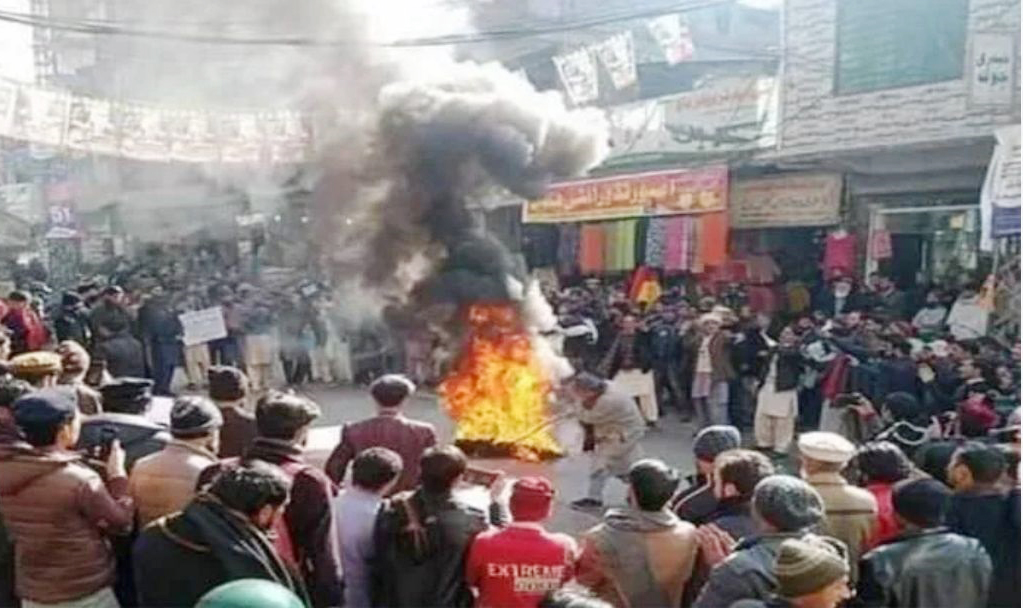 Early Times Report Early Times Report
New Delhi, June 11: Pakistan's democratic credentials today stand severely eroded. The latest wave of violence in Pakistan-occupied Jammu and Kashmir (PoJK) reflects not only a one-off crisis but a manifestation of a deeper political and economic malaise of the Pakistani state.
For years, PoJK has witnessed economic stagnation and worsening social indicators due to the apathy of decision-makers in Islamabad and Rawalpindi. The region has largely been treated as a political and diplomatic instrument while its people continue to struggle for basic necessities such as affordable food, electricity, roads, healthcare, and employment.
Pakistan's broader economic condition has only aggravated these grievances. Often described as an "IMF addict," Pakistan has so far availed around 25 IMF bailout packages since 1958. Yet, successive governments have failed to undertake meaningful structural reforms, largely due to political instability and the ever-present threat of military intervention. The economy remains on a perpetual "ventilator," with the spectre of default never far away.
At the heart of this crisis lies a system of elite capture. A small ruling elite comprising the military, bureaucracy, judiciary, and political dynasties continues to command a disproportionate share of national resources. Simultaneously, Pakistan's security-state orientation ensures that a vast portion of its limited resources are devoted exclusively to sustaining its military establishment, often at the expense of human development and welfare.
With economic growth struggling below 3% and population growth far exceeding it, Pakistan faces mounting unemployment, inflation, and social distress. The country increasingly appears vulnerable to widespread civil unrest, a trend now visible in PoJK.
The emergence of the Jammu Kashmir Awami Action Committee (JKAAC) was a direct response to growing public frustration to the elite capture. Formed by grassroots leaders, the movement sought greater democratic representation, protection of local rights, and accountability. Initially, JKAAC pursued peaceful engagement with authorities and organized democratic protests to highlight public grievances.
The movement was viewed as a platform for genuine political representation. However, allegations of extensive pre-poll rigging and manipulation by Pakistani military establishment led JKAAC to boycott elections, reinforcing perceptions that democratic processes had been compromised.
The state's response which was brutal and massive, proved counterproductive. The crackdown on peaceful protesters, resulting in deaths and injuries, deepened public anger and accelerated the transformation of a reformist movement into a more openly anti-state platform.
The unrest in PoJK mirrors broader patterns visible in Khyber Pakhtunkhwa (KPK), Balochistan, and Gilgit-Baltistan (GB), where alienation from the centre continues to grow. Instead of strengthening democratic institutions and expanding political participation, recent constitutional and political developments have further concentrated power, pushing Pakistan closer towards authoritarian rule while only maintaining the façade of democracy.
The Pakistani establishment appears unwilling to acknowledge the gravity of the crisis. Yet economic distress, political exclusion, and regional alienation are converging into a potentially dangerous mix. The ongoing turmoil in PoJK serves as a warning that unless Pakistan embraces genuine democratic reform and inclusive governance, the country's internal instability is likely to push it deeper into abyss.
Background:
Jammu Kashmir Joint Awami Action Committee (JKJAAC) is a grassroot movement advocating for the economic and political rights of the people of PoJK.
It was formed by coalition of local traders, transporters, lawyers & students protests over inflation, electricity tariffs in 2022-2023. Formally, in September 2023 they organized as the JKJAAC (Jammu Kashmir Joint Awami Action Committee) in Muzaffarabad.
By 2025, JKJAAC expanded its demands into a 38-point charter of demands (Page containing charter of demand enclosed).
On 29.09.2025, JKJAAC announced "Complete & Indefinite Shutdown" across PoJK which resulted in killing of more than 10 persons and more than 150 getting injured. Around 2,000 troops were deployed across PoJK.
On 04.10.2025, an agreement was signed between PoJK govt and JKJAAC as the govt agreed to fulfil some of the demands, which ended the 06-day strike and protest movement began on 29.09.2025.
On 25.02.2026, JKJAAC after a meeting with their core members announced to general public to prepare for lockdown across PoJK.
JKJAAC called for an indefinite shutdown/ wheel jam strike across PoJK Starting from 09.06.2026 due to non-implementation of 38-point charter of demands which was agreed upon by JKJAAC and PoJK govt during negotiations in October 2025.
REASONS FOR PROTESTS
The current wave of protests by JKJAAC demands abolition of 12 Muhajir seats in PoJK assembly, which JKJAAC claims are used by National Parties to maintain hegemony in the assembly.
Inflation being witnessed in PoJK, people facing economic hardships even for basic commodities like wheat and rice.
The movement criticized the excessive benefits being given to ministers, legislators and senior officials while ordinary citizens face economic hardships.
The other issues include local rights over resources, electricity prices, governance, economic reforms and autonomy etc.
MAJOR INCIDENTS (JUNE 05-09)
In the clashes surrounding the protests around 80 civilians/protestors were killed and more than 500 were injured in Kotli, Muzaffarabad, Mirpur, Plandri and Rawalakot areas in PoJK. Also more than 1000 individuals have been detained by Pakistani Security Forces to control the protests.
Umar Nazir Kashmiri, a JK-JAAC central committee member and spokesperson involved in organizing protest and public outreach in PoJK was injured in the initial clashes and another member Shahzaib Habib (an executive member of JK-JAAC and resident of village Galiyata) got killed.
To curb the protest, Govt. imposed Section 144 in Muzaffarabad & Rawalakot and also police sealed the central office of Awami Action Committee at Muzaffarabad.
Additional troops (around 500-600) were deployed in Rawalakot by the administration.
On 08.06.2026, Tauseef Jaral, Bhimber Core Committee member of JAAC was arrested by authorities and lodged in Bhimber Jail.
On 08.06.2026, activists Mahmood Kashmiri, Chairman of J&K National Independence Alliance alleged that large quantity of weapons and heavily armed individuals have entered PoJK from Pakistan, creating an atmosphere of terror in PoJK.
On 09.06.2026, around 3,000 protestors on motorcycles and cars reached Kotli from Khuiratta and about 10,000 protestors reached Kotli from Dadyal (Mirpur).
In the clashes around 05 Pakistan Security forces were killed and around 60 Security personnel were injured in Kotli, Rawalakot. In Plandari, local protestors also seized 02 rangers vehicle and detained Rangers personnel.
Islamabad police bus en-route to control the JK-JAAC protests fell into a river in Kotli, POJK. More than 40 police personnel are reported missing. The incident occurred when the driver attempted to escape from a protesting mob, after which the bus lost control and fell into the river.
Pakistani agencies are circulating doctored videos of Shaukat Nawaz Mir and Khwaja Miran on social media platforms to mislead the masses as the voices of the above mentioned individuals does not match the voice in the video.
Rawalakot and Muzaffarabad main market was completely converted into a shed by the police and army personnel. Apart from Rangers, FC and Police, snipers are also present. They are also using drones to monitor the protestors at sensitive places in Rawalakot and Muzaffarabad.
Internet is suspended in PoJK till 12th June or till further orders. Besides mobile calling services is also suspended in Rawalakot, Kotli and Muzaffarabad for most of the times.
PoJK Govt. has issued a notification regarding 10 million reward money to be granted to any person who provides information leading to successful arrest of Shoukat Nawaz Mir, Umar Nazir Kashmiri, Khawaja Mehran Arshad & SardaAmaan Khan (all main members of the core committee.) | | |
|
|