 Early Times Report Early Times Report
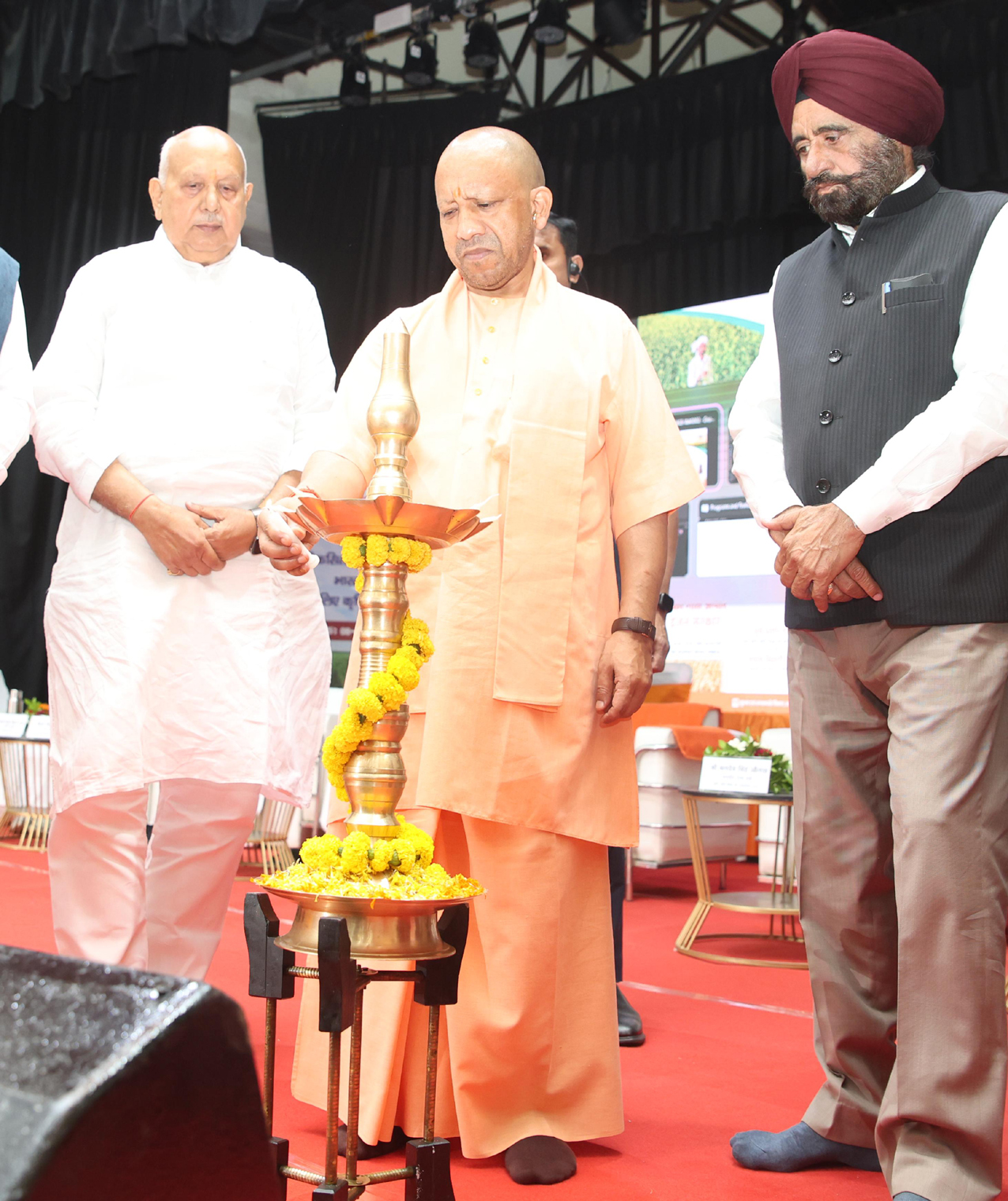
LUCKNOW, Apr 8: While inaugurating the 6th Uttar Pradesh Agricultural Science Congress 2026 held in Lucknow, Chief Minister Yogi Adityanath presented a comprehensive and forward looking vision for the overall development of the agriculture sector.
He clearly stated, the time has come to take agriculture from production to productivity, from productivity to profitability, and ultimately from profitability to prosperity. The vision of a Atmanirbhar Viksit Bharat will be realized only when the farmer becomes prosperous. Increasing production alone is not sufficient, it is necessary to make it profitable and sustainable.
This journey from production to prosperity will determine the path of the future, and Uttar Pradesh is ready to play a leading role in this direction.
Chief Minister added, "During this 3 day event, serious deliberations will be held on various aspects of agriculture, in which ground level experiences, innovations, and successful experiments will be shared. This platform should not remain limited to discussions, but should become a medium for preparing a concrete action plan so that farmers can receive real benefits."
Referring to the agricultural potential of Uttar Pradesh, he said that the state is home to about 16 to 17% of the country's population, while it has only about 11% of the cultivable land. Despite this, Uttar Pradesh contributes about 21% to the country's total food grain production. This is the result of planned efforts, farmers' hard work, and effective policies. The state has succeeded in increasing the agricultural growth rate from 8% to about 18%, which is a remarkable achievement.
Chief Minister further informed, "Historically, agriculture has been the foundation of India's economic strength. There was a time when India's share in the global economy was around 44 to 45 percent, and the primary reason was its strong agricultural system."
He added, during that time, farmers were not only producers but also artisans and entrepreneurs. They participated in processing and manufacturing along with production. However, over time, this system weakened and farmers were reduced to being producers of raw materials only, which led to economic imbalance. The food producing farmer began to fall into debt. |
