 Early Times Report Early Times Report
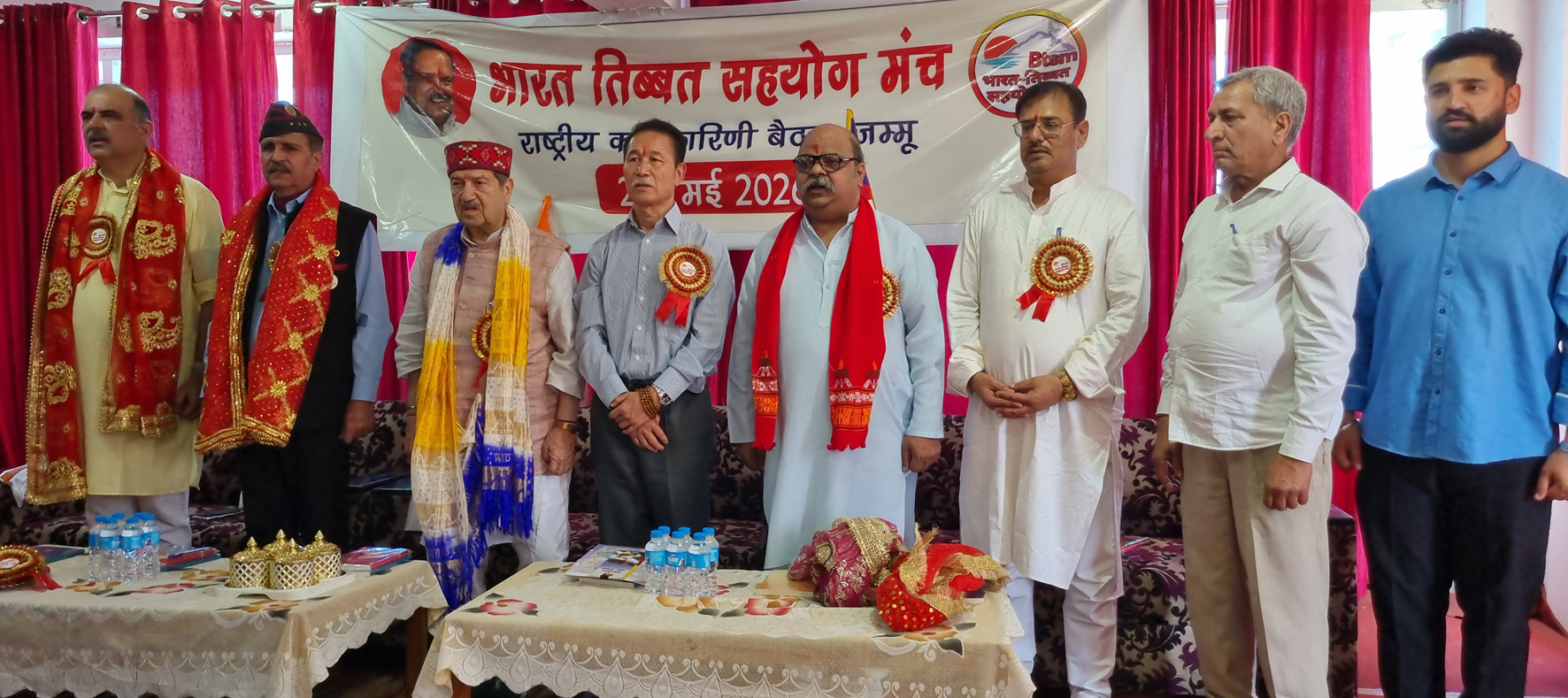
JAMMU, May 2: The Bharat Tibet Sahyog Manch successfully organised its National Executive Meeting and "Vichar Goshti" on May 2-3, 2026, at the Galaxy College of Education, Sainik Colony, Jammu.
The programme focused on the theme "Himalayas in the 21st Century: India's Security, Challenges, and Future Dimensions", bringing together distinguished thinkers, policymakers, and social leaders to deliberate on critical national issues.
The event was held under the guidance of Shri Indresh Kumar Ji, Senior Pracharak, Rashtriya Swayamsevak Sangh and Margdarshak of BTSM. Rupesh Kumar Ji, Central Executive Member, RSS, graced the occasion with his presence.
The chief guest, Thupten Lungring Ji, former Education Minister of the Central Tibetan Administration, addressed the gathering and highlighted the importance of India-Tibet relations in the context of regional security and cultural ties.
The session was presided over by Lt. Gen. R.K. Sharma (Retd.), who shared valuable insights on strategic and security perspectives concerning the Himalayan region.
Speaking on the occasion, Shri Indresh Kumar Ji strongly underlined the strategic importance of the Himalayas and cautioned against emerging threats, stating, "The Himalayas are India's natural protective shield. Any attempt to disturb its ecological, cultural, or strategic balance is a direct challenge to India's sovereignty."
He further remarked, "We must remain vigilant against the expansionist and destabilising tendencies being witnessed in the Himalayan region. There is a need for national unity and awareness to counter such designs effectively."
Highlighting the need for proactive measures, he added, "Securing the Himalayas is not just the responsibility of the armed forces alone-it requires collective national participation, policy clarity, and sustained development of border areas."
Shri Thupten Lungring Ji in his address expressed concern over the changing geopolitical scenario and said, "The developments in the Himalayan region have far-reaching implications for peace and stability in Asia. It is important for the global community to understand the ground realities."
He further stated, "Preserving the identity, culture, and environment of the Himalayan region is crucial. Any disruption in this fragile ecosystem impacts not just one nation, but the entire region."
Emphasising cooperation, he added, "India's role in maintaining balance and stability in the Himalayas is vital. Strengthening ties, promoting awareness, and ensuring sustainable development are key to counter emerging challenges."
Presiding over the session, Lt. Gen. R.K. Sharma (Retd.) remarked, "A comprehensive approach combining strategic preparedness, environmental sensitivity, and socio-cultural awareness is vital to address the emerging challenges in the Himalayan belt."
The programme witnessed participation from members of the organization, intellectuals, and citizens, who engaged in meaningful discussions on national security, environmental concerns, and policy perspectives.
This meeting will last for two days. Through various sessions in this meeting, deliberations took place on national programs and schemes. Meaningful discussions were held on national security, environmental issues, and policy-making. |
