news details |
|
|
| 90-year-old heart patient from Jammu gets new lease of life after TAVR by Dr HK Bali | | | 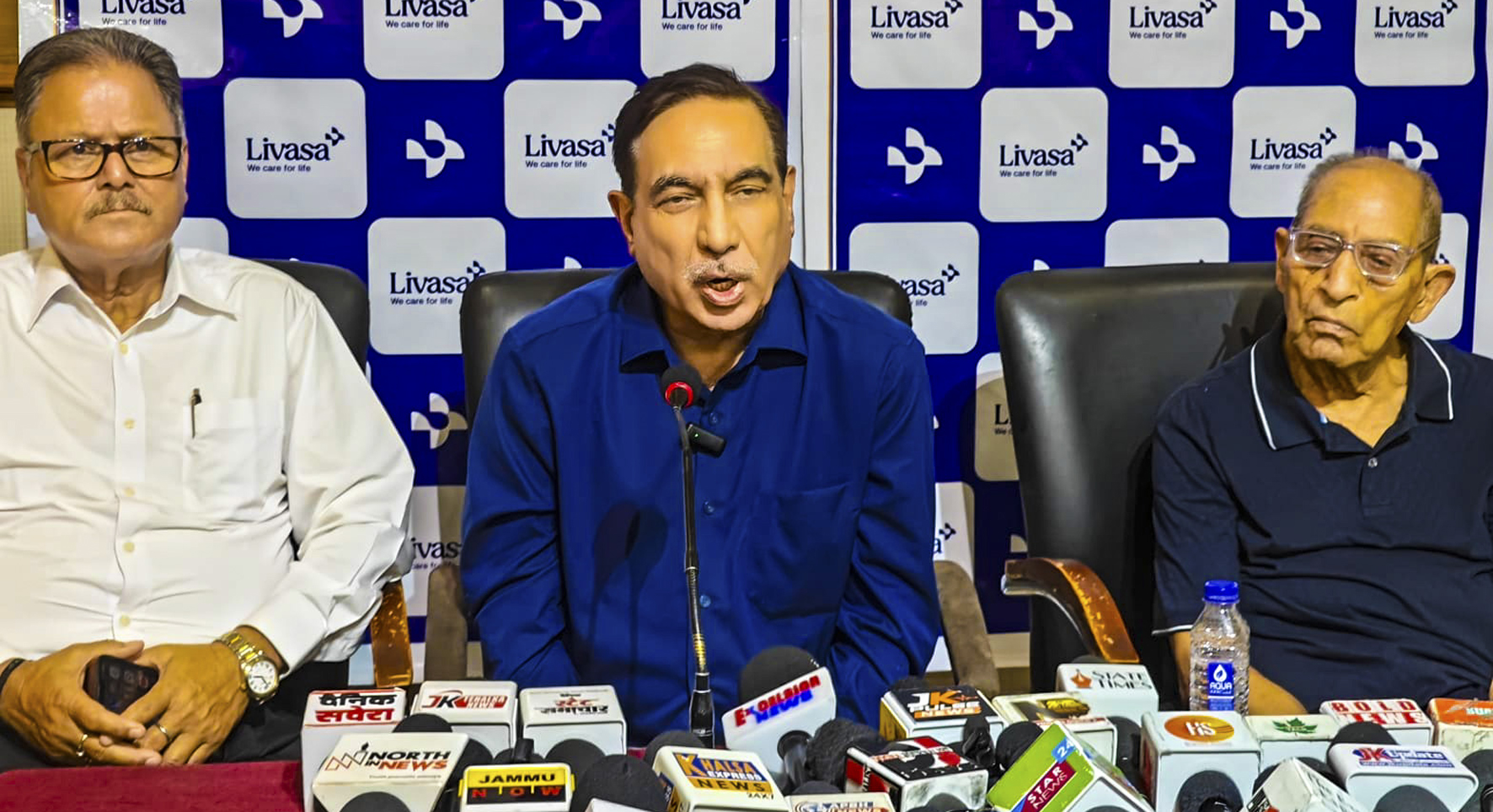 Early Times Report Early Times Report
JAMMU, July 11: A 90-year-old patient from Jammu, battling severe aortic stenosis and considered at high risk for conventional heart surgery, got a new lease of life after a successful Transcatheter Aortic Valve Replacement (TAVR) at Livasa Hospital Mohali by Dr HK Bali, Chairman - Cardiac Sciences.
Addressing a press conference at Jammu Press Club on Saturday, Dr Bali said ," Daftari Shah, the patient underwent the minimally invasive procedure in September 2025. Nearly ten months later, he continues to live an active and independent life.:
Sharing his experience Shah thanked Dr. Bali and the Livasa team for their expertise, timely intervention, and compassionate care, saying the procedure had given him a new lease on life.
Talking about awareness about aortic valve disease, Dr. Bali said that aortic stenosis-a narrowing of the heart's aortic valve-is becoming increasingly common with advancing age, affecting nearly 2% of people above 80 years and almost 4% of those above 90 years. If left untreated, severe aortic stenosis can lead to heart failure, recurrent fainting, chest pain, and even sudden cardiac death.
"Age alone should never prevent someone from receiving life-saving treatment. Today, many elderly patients who were once considered too high-risk for surgery can safely undergo TAVR and return to an active, independent life."
Dr. Bali further explained that TAVR has emerged as a safe, effective and minimally invasive alternative to conventional surgical valve replacement for carefully selected patients. Performed through a catheter, usually under local anaesthesia, the procedure eliminates the need to open the chest, allowing most patients to walk within 24 hours and return home in just two to three days.
Sharing Livasa Hospital Mohali's experience in structural heart interventions, Dr. Bali said the team has successfully treated patients above 90 years of age, as well as those with severe kidney disease, chronic lung disorders, previous strokes, prior bypass surgery and failed bioprosthetic valves requiring valve-in-valve procedures. He added that Livasa is also managing highly complex cases such as low-flow, low-gradient aortic stenosis, significantly expanding treatment options for patients once considered inoperable.
He said that low-flow, low-gradient aortic stenosis often remains undiagnosed despite causing severe heart failure and poor heart function, making timely diagnosis and referral critical. He also noted that Indian patients more commonly present with bicuspid aortic valve disease than Western populations, making these procedures technically more demanding and underscoring the importance of experienced structural heart teams.
Emphasising personalised care, Dr. Bali said every patient is evaluated by a dedicated multidisciplinary Heart Team comprising interventional cardiologists, cardiac surgeons and cardiac anaesthetists to determine the most appropriate treatment. While TAVR has become the preferred treatment for elderly patients with symptomatic severe aortic stenosis, younger patients generally continue to benefit from conventional surgical valve replacement.
Dr. Bali's team has successfully performed more than 50 TAVR in the last 8 years and the first TAVR in the region (upper north) was done by him in 2017.
Anurag Yadav, CEO-Livasa Hospitals, said, "Healthcare is evolving rapidly, but our purpose remains constant-to ensure that patients have access to the very best clinical expertise and treatment, irrespective of where they live. At Livasa Hospitals, we are building centres of excellence led by some of the country's finest clinicians, backed by advanced technology and robust clinical governance. Success stories like Mr. Shah's reinforces our commitment to making world-class cardiac care more accessible across North India." |
|
|
|
|
|
|
|
|
|
|
|
|
| |
| |
|
|
|
|
 |
|
|
