 Early Times Report Early Times Report
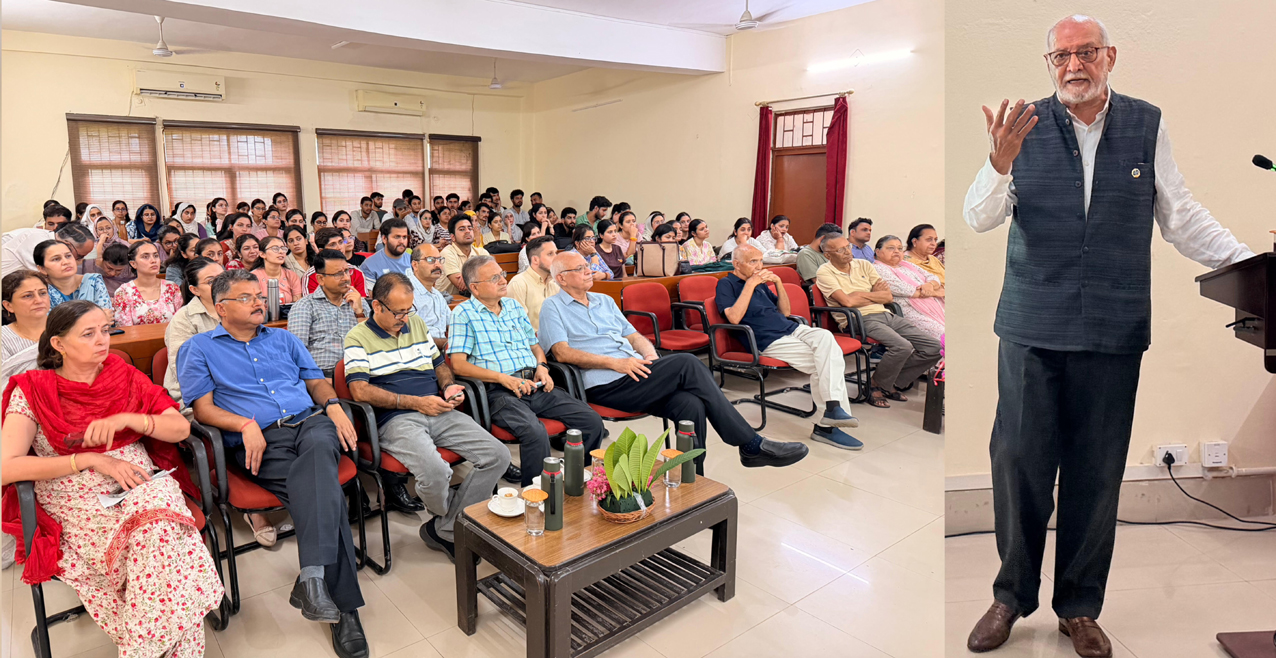
JAMMU, Aug 3: The Institution's Innovation Council (IIC), University of Jammu, in collaboration with the Department of Botany, on Sunday organized an INNOVTALKS lecture on the theme, "Vegetables for Nutritional Security in the Face of Climatic Change - Way Forward," at the Seminar Hall of the Department of Botany, University of Jammu. The lecture was delivered by Dr. Surinder K. Tikoo, President, Academy of Indian Horticulture, Bengaluru, and an accomplished plant breeder and crop improvement consultant, who has made significant contributions in the field of vegetable crop improvement and sustainable horticulture. Welcoming the gathering, Head, Department of Botany and Convener, Institution's Innovation Council, University of Jammu, Prof. Susheel Verma emphasized the importance of promoting innovation-driven agricultural practices to address the emerging challenges posed by climate change. He highlighted the critical role of climate-resilient vegetable production in ensuring nutritional security, improving farmers' livelihoods and contributing to sustainable agricultural development. Prof. Veenu Kaul, President, Institution's Innovation Council (IIC), University of Jammu, introduced the speaker and emphasized the need for strengthening innovation, entrepreneurship and interdisciplinary learning initiatives across the University.
Delivering the keynote address, Dr. Tikoo discussed the challenges confronting vegetable production under changing climatic conditions, including rising temperatures, erratic rainfall, water scarcity and increasing incidences of pests and diseases. He said vegetables are indispensable components of a balanced diet, providing essential vitamins, minerals, antioxidants and dietary fibre, thereby playing a pivotal role in combating malnutrition and ensuring food and nutritional security. He elaborated on recent advances in plant breeding, climate-resilient vegetable varieties, protected cultivation technologies, integrated nutrient and pest management, precision agriculture and conservation of indigenous germplasm. Sharing his experiences of working with agritech companies such as Tierra Agrotech Ltd., Advanta, Syngenta and Corteva, he emphasized the need for market-driven research, advanced breeding technologies, robust data systems and global development networks. He also encouraged students and researchers to focus on translational research and innovation-driven solutions that can benefit farming communities at the grassroots level. |
