 Early Times Report Early Times Report
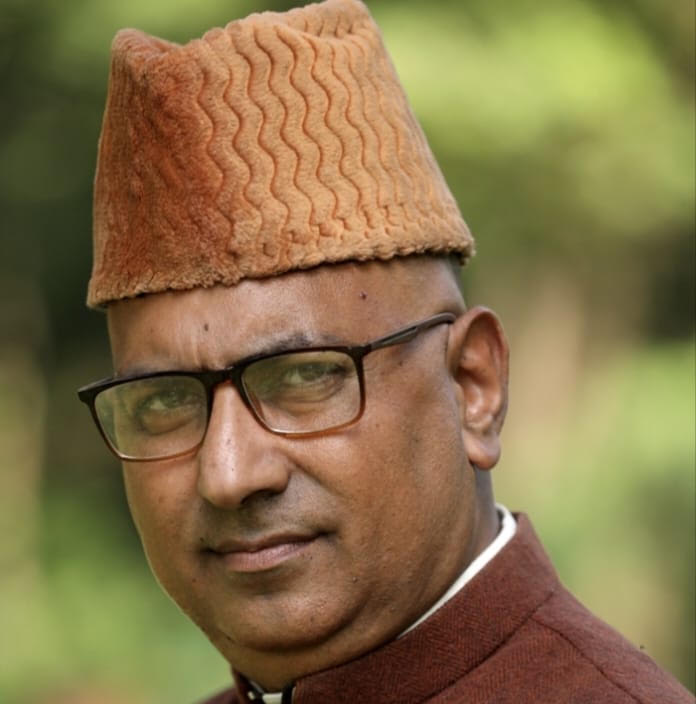
NEW DELHI, Aug 18: BJP Rajya Sabha Nominated MP Er. Gulam Ali Khatana raised a comprehensive parliamentary question on the implementation of major Central health and family welfare schemes in Jammu & Kashmir, seeking district-wise details of beneficiaries, healthcare infrastructure, financial releases and utilisation, implementation gaps and corrective measures.
Khatana sought details regarding Ayushman Bharat PM-JAY SEHAT, National Health Mission (NHM), PM-Ayushman Bharat Health Infrastructure Mission (PM-ABHIM), eSanjeevani, Mission Indradhanush and TB Mukt Bharat Abhiyan during the last five years.
The Ministry of Health and Family Welfare stated that 25 lakh families in J&K are covered under Ayushman Bharat PM-JAY, including 6.70 lakh families under AB-PMJAY, with the remaining eligible families covered exclusively under AB-PMJAY SEHAT.
During FY 2021-22 to FY 2025-26, Central releases to J&K amounted to Rs 3,973.74 crore under NHM and Rs 171.25 crore under PM-ABHIM, totalling Rs 4,144.99 crore.
The response further revealed that 18,85,362 eSanjeevani teleconsultations had been provided in J&K up to July 2026, while 3,174 Ayushman Arogya Mandirs, including AAM-AYUSH, were operational across the UT.
Under PM-JAY, Jammu recorded 2,10,408 authorised hospital admissions during FY 2021-22 to FY 2025-26, the highest among the districts, followed by Srinagar with 1,97,433, Baramulla with 1,67,555 and Anantnag with 1,52,499.
The Ministry also furnished district-wise data under Intensified Mission Indradhanush. During the 2023 round, Poonch recorded 11,648 children and 2,977 pregnant women vaccinated, while Jammu recorded 9,838 children and 1,622 pregnant women vaccinated.
Under the TB Mukt Bharat Abhiyan, J&K recorded 12,017 notified TB cases in 2025 and 6,554 cases during January-June 2026. The Ministry stated that the programme focuses on early detection, screening, timely treatment, differentiated care, nutritional support and preventive treatment for vulnerable populations.
Er. Gulam Ali Khatana said that placing comprehensive district-wise health data before Parliament is essential for greater transparency, effective monitoring and improved service delivery. He emphasised the need to strengthen healthcare infrastructure, human resources and digital health services so that Central health initiatives translate into tangible benefits for people, particularly in remote and underserved areas of Jammu & Kashmir. |
