news details |
|
|
| CS visits Zehanpora Archaeological Site, marks commencement of Phase-II excavation | | | 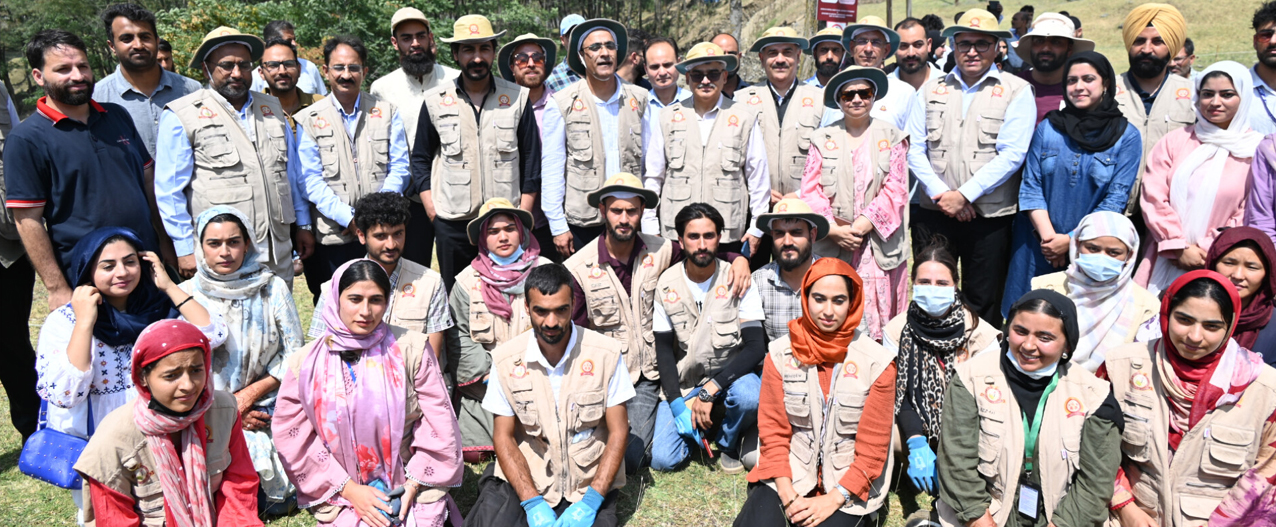 Early Times Report Early Times Report
BARAMULLA, Aug 29: Chief Secretary, Atal Dulloo, today visited the ongoing archaeological excavation site at Zehanpora in Baramulla to review the progress of excavation works, the historical and archaeological significance of the site and mark commencement of Phase-II of the excavation.
The visit was attended by the Vice Chancellor, University of Kashmir; Principal Secretary, Culture Department; Deputy Commissioner, Baramulla; Director, Archives, Archaeology & Museums; SSP Baramulla; SDM Uri; faculty members of University of Kashmir Government and Degree College Baramulla besides other concerned officers and officials.
Pertinently, Zehanpora is an important archaeological site in the Baramulla region and holds considerable potential for providing valuable insights into the settlement patterns, material culture, technology and way of life of communities that inhabited the region during earlier periods. Archaeological excavation at such sites enables researchers to understand the past through material remains, including structural remains, pottery, tools, metal objects, skeletal remains and other archaeological deposits, thereby helping in reconstructing the history and cultural development of the region.
The first phase of excavation at Zehanpora yielded several significant findings, providing important clues about the nature of the site and the activities of the people associated with it. Among the notable discoveries was a pebble wall constructed using naturally available stones and pebbles. The remains provide evidence of construction activity at the site and may help archaeologists understand the layout and building practices of the settlement. A number of iron nails were also recovered, indicating the use of iron objects and providing insights into the technological practices and material culture of the period. Several pottery fragments were recovered from the archaeological deposits, which are important indicators for understanding the chronology, cultural practices and everyday life of the communities that occupied the site.
One of the most significant discoveries during Phase-I was a human skeleton recovered from the excavated area. The finding is of considerable archaeological importance, as skeletal remains can provide valuable information regarding burial practices, health, lifestyle and the biological characteristics of past populations. Further scientific examination of the remains is expected to provide additional information about the individual and the context in which the skeleton was found.
Building on the findings of Phase-I, Phase-II of the excavation has now commenced with the objective of undertaking a more detailed investigation of the archaeological deposits and gaining a deeper understanding of the site's historical significance.
|
|
|
|
|
|
|
|
|
|
|
|
|
| |
| |
|
|
|
|
 |
|
|
