news details |
|
|
| AIIMS Jammu initiates treatment for retinopathy of prematurity | | | 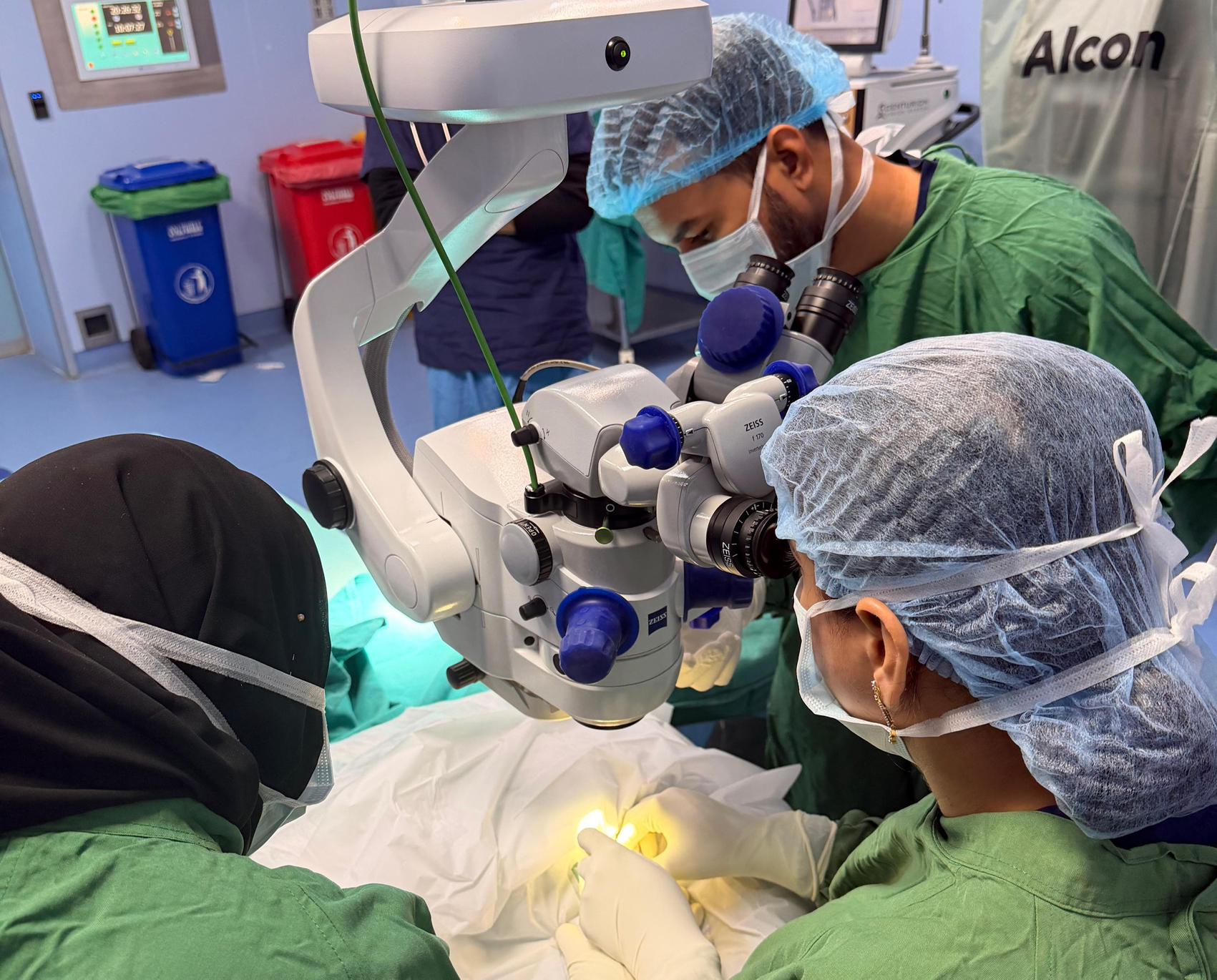 Early Times Report Early Times Report
JAMMU, Sept 16: In a significant medical intervention aimed at preventing vision loss in a premature infant, Retinopathy of Prematurity (ROP), a potentially blinding eye disorder affecting premature and low-birth-weight newborns, was timely diagnosed and managed at AIIMS Jammu. The condition was diagnosed by Dr. Ridham Nanda, Assistant Professor, Department of Ophthalmology, who identified vision-threatening ROP during evaluation. Considering the risk of permanent visual impairment, the child was promptly taken up for treatment and received anti-VEGF injections in both eyes under topical anesthesia. The injections were administered in the operation theatre under strict aseptic precautions. The Anesthesia team, led by Dr. Raksha Kundal and Dr. Aleesha Gupta, closely monitored the infant during the procedure.
Senior Residents Dr. Sadaf Choudary and Dr. Asma Jabeen, and Junior Residents Dr. Supritam Das and Dr. Rupayan, were involved in the pre-operative and post-operative care of the patient.
Dr. Bhavani Raina, Additional Professor and Officiating Head, Department of Ophthalmology, supervised the procedure and ensured smooth coordination among the clinical and supporting teams. Her supervision contributed to the safe and timely management of the vision-threatening condition.
Prof. (Dr.) Sanjeev Sinha, Executive Director & CEO, AIIMS Jammu, appreciated the efforts of the Department of Ophthalmology and the multidisciplinary teams involved in the management of the case. He emphasized that timely diagnosis, regular screening and prompt treatment are crucial in protecting the vision of premature infants, particularly in cases of vision-threatening ROP. He also stressed the importance of undertaking clinically indicated interventions without delay to reduce the risk of irreversible visual impairment.
Retinopathy of Prematurity is an eye disease that primarily affects premature babies whose retinal blood vessels have not fully developed. In severe cases, abnormal blood vessel growth can lead to retinal detachment and irreversible blindness. Since ROP may progress without obvious external symptoms, regular screening and early detection are essential for timely intervention.
Doctors highlighted that advances in neonatal care have improved the survival of extremely premature and very low-birth-weight infants, increasing the need for systematic ROP screening. Timely referral, regular screening and appropriate treatment remain key to preventing avoidable childhood blindness associated with the disease.
The successful management of the case highlights the importance of multidisciplinary coordination and timely intervention in safeguarding the vision of premature infants. |
|
|
|
|
|
|
|
|
|
|
|
|
| |
| |
|
|
|
|
 |
|
|
