 Early Times Report Early Times Report
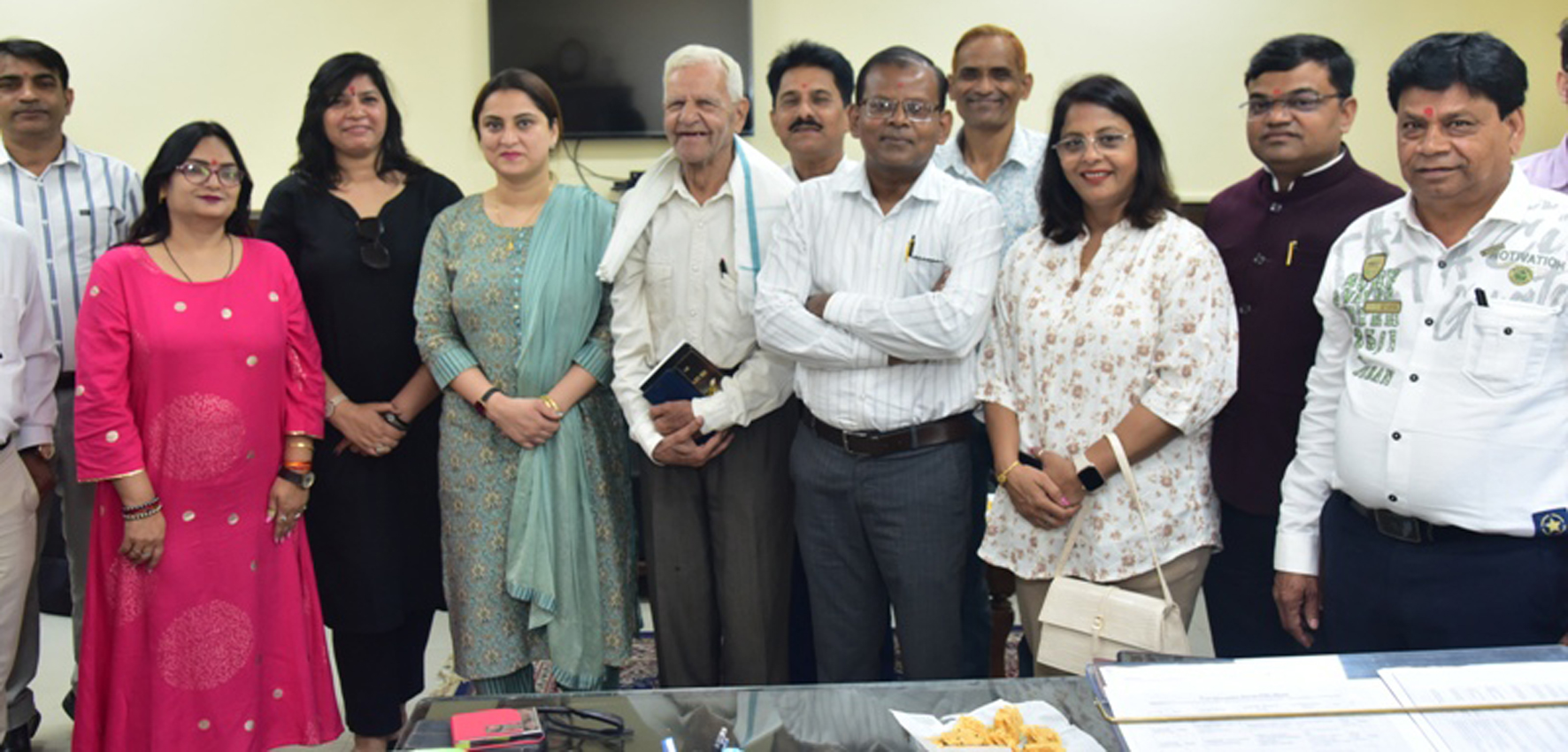
JAMMU, Sept 21: A media delegation of ten journalists from Bhopal met Neha Jalali, Director, PIB Jammu, during its visit to Media Centre Building today. During the interaction, Ms Jalali highlighted the significant developments taking place in Jammu and Kashmir in the areas of connectivity, infrastructure, healthcare, entrepreneurship and economic opportunities following the abrogation of Article 370. She spoke about the expansion and upgradation of road infrastructure across the Union Territory, including the development of major highways, bridges and tunnel networks.
Jalali also highlighted developments in the healthcare sector, particularly the establishment and growth of AIIMS Jammu. She noted the institution's importance in strengthening advanced healthcare facilities in the region and in providing people with greater access to specialised medical services and modern healthcare infrastructure.
Speaking about emerging economic opportunities, Ms Jalali highlighted the Aroma Mission and its role in promoting cultivation, value addition and entrepreneurship in the aromatic and allied sectors. She spoke about the potential of such initiatives to provide new livelihood opportunities, encourage local enterprise and support farmers and young entrepreneurs.
Jalali further spoke about Jammu and Kashmir's rich cultural diversity and heritage, highlighting the region's varied traditions, languages, festivals, handicrafts, arts and cuisines.
Later, the delegation, led by Shariq Noor, Deputy Director, Central Bureau of Communication (CBC), Bhopal, visited the Regional Office of the National Highways Authority of India (NHAI) in Jammu, and undertook a field visit to key highway infrastructure projects in the region. The delegation comprises senior representatives of media organisations based in Bhopal.
During the visit, NHAI Project Director Rajiv Kumar briefed the delegation on major highway and tunnel projects being implemented in Jammu and Kashmir. He described National Highway-44 (NH-44) as a key connectivity corridor and informed the delegation that four-laning of the highway is nearing completion, with around 15 km remaining to be four-laned.
The delegation was briefed about the Delhi-Katra Expressway and its role in strengthening connectivity between the National Capital Region, Jammu and Katra. Officials also apprised the media representatives about the use of tunnels on the highway corridor, which has reduced the road distance to Srinagar by around 45 km and saves more than an hour of travel time. The earlier road distance was around 300 km.
Six tunnels on various highway projects are expected to be completed in the coming year, further strengthening all-weather connectivity in the region. The delegation also visited the Chenani-Nashri Tunnel and was briefed about its construction, operation and role in reducing travel time and improving the reliability of the Jammu-Srinagar highway corridor.
The officials further informed the delegation that the Zojila Tunnel is expected to become operational by December 2027. The project is aimed at providing improved and more reliable connectivity between the Kashmir Valley and Ladakh.
The proposed Katra-Kulgam road project is currently under Detailed Project Report (DPR) preparation. Once developed, the corridor is expected to provide the shortest road connectivity to the Kashmir Valley from the Jammu side.
The delegation was also briefed on the overall progress of NHAI projects in Jammu and Kashmir. A total of 22 projects with a combined length of 382 km have been completed at a cost of ?14,819 crore, while 16 projects covering 320 km are under implementation at an estimated cost of ?22,277 crore. |
