| Sustainable Tourism, Shared Prosperity | | | 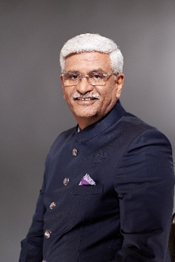 Shri Gajendra Singh Shekhawat Shri Gajendra Singh Shekhawat
Union Minister for Culture and Tourism
Tourism is not simply the act of travel; it is a bridge between peoples, a generator of livelihoods, and a channel through which our culture is shared with the world. On this World Tourism Day, dedicated to Tourism and Sustainable Transformation, it is important to recognise how under the decisive leadership of Prime Minister Narendra Modi, India’s tourism story has been reshaped. What was once a seasonal and scattered pursuit has become a planned, inclusive, and sustainable driver of national development.
This change is measured not in abstractions but in lives touched. By June 2025, inbound tourism reached 1.65 million visitors, outbound travel 8.44 million, and foreign exchange earnings from tourism touched Rs 51,532 crore. In 2023–24 alone, the sector contributed Rs 15.73 lakh crore to GDP — more than five per cent of the economy — and supported over 84 million jobs. Behind these figures are artisans finding new markets, families opening homestays, and guides, drivers, and small businesses enjoying steadier demand.
At the heart of this progress lies the Prime Minister’s conviction that tourism must serve as a national priority, not a fringe activity. Infrastructure and connectivity were expanded through new airports, modernised railways, newly built highways and inland waterways. The UDAN scheme brought air travel within reach of smaller towns.
Better last-mile links to heritage sites and pilgrim circuits have made journeys possible for millions who were once excluded by cost or distance. Tourism has thus become an instrument of balanced regional development, not an urban luxury.
Destination development, too, has been guided by this vision. Programmes such as Swadesh Darshan 2.0 and PRASHAD place sustainability and cultural integrity at their core. The introduction of Destination Management Organisations brings together government, private players, and local communities, ensuring that resources are managed wisely and benefits flow equitably.
The Prime Minister has also re-imagined how India presents itself to the world. A revitalised Incredible India portal, partnerships with global travel platforms, and new forms of digital storytelling have given the smallest operators — village hosts, homestays, cultural entrepreneurs — access to global audiences. Technology has become a tool not only for marketing but also for protecting fragile sites through data-driven management.
Sustainability, however, is the most distinctive hallmark of this transformation. Building upon his wider LiFE movement — Lifestyle for Environment — the Prime Minister launched “Travel for LiFE”, embedding stewardship into tourism itself. From low-impact rural experiences to eco-sensitive infrastructure and responsible pilgrimage management, the emphasis is on ensuring that travel nurtures rather than depletes. Under India’s G20 Presidency, the Goa Roadmap was advanced to align global tourism with the Sustainable Development Goals, placing green growth, skills, digitalisation, and support for MSMEs at the centre of global discourse.
Fiscal reforms have reinforced these structural shifts. The most recent — the reduction of GST on hotel rooms priced between Rs 1,000 and Rs 7,500 to 5 per cent — was a conscious step to encourage the middle-class traveller whose pilgrimages, weekend trips and rural stays sustain much of the sector. While debate continues over the withdrawal of input tax credit, the larger impact is clear: affordability has widened access. More travellers mean fuller hotels, greater demand for local services, and new opportunities for artisans and entrepreneurs. As Prime Minister Modi has emphasised, affordability is not merely an economic lever but a democratic principle, making travel the right of the many rather than the privilege of the few.
Yet the Prime Minister has consistently reminded us that policy alone is insufficient. Transformation demands community at its heart. That is why programmes train local youth as guides, incentivise eco-friendly hospitality, support artisans to reach wider markets, and protect the sanctity of pilgrim circuits. Tourism, in this vision, is not imposed from above but built with those whose lives it most directly shapes.
Challenges remain — infrastructure bottlenecks, the vulnerabilities of climate change, the rising expectations of modern travellers — but India today has the tools to respond. Under Mr. Modi’s leadership, we have forged institutions, financing models, and governance frameworks to meet these tests.
Looking forward, three priorities will guide us. We must deepen sustainability, ensuring growth always yields ecological dividends. We must democratise benefits by investing in MSMEs and mid-market enterprises that create local jobs. And we must strengthen governance and data so that flows are managed wisely and assets preserved.
India’s experience proves that when coherent policy, fiscal prudence, and community engagement converge under visionary leadership, transformation is real. On this World Tourism Day, let us pledge to travel responsibly, to support local livelihoods, and to keep alive the promise of Viksit Bharat in every itinerary. Tourism, rightly nurtured, will not only be a pillar of our economy but a living testimony to India’s civilisational ethos — open, resilient, and hospitable. The road ahead is long, but under the leadership of Prime Minister Modi, we have built the vehicle. Now we must steer it with care, courage, and a shared sense of purpose.
(The author is Union Minister for Culture and Tourism, Government of India.) |
|
