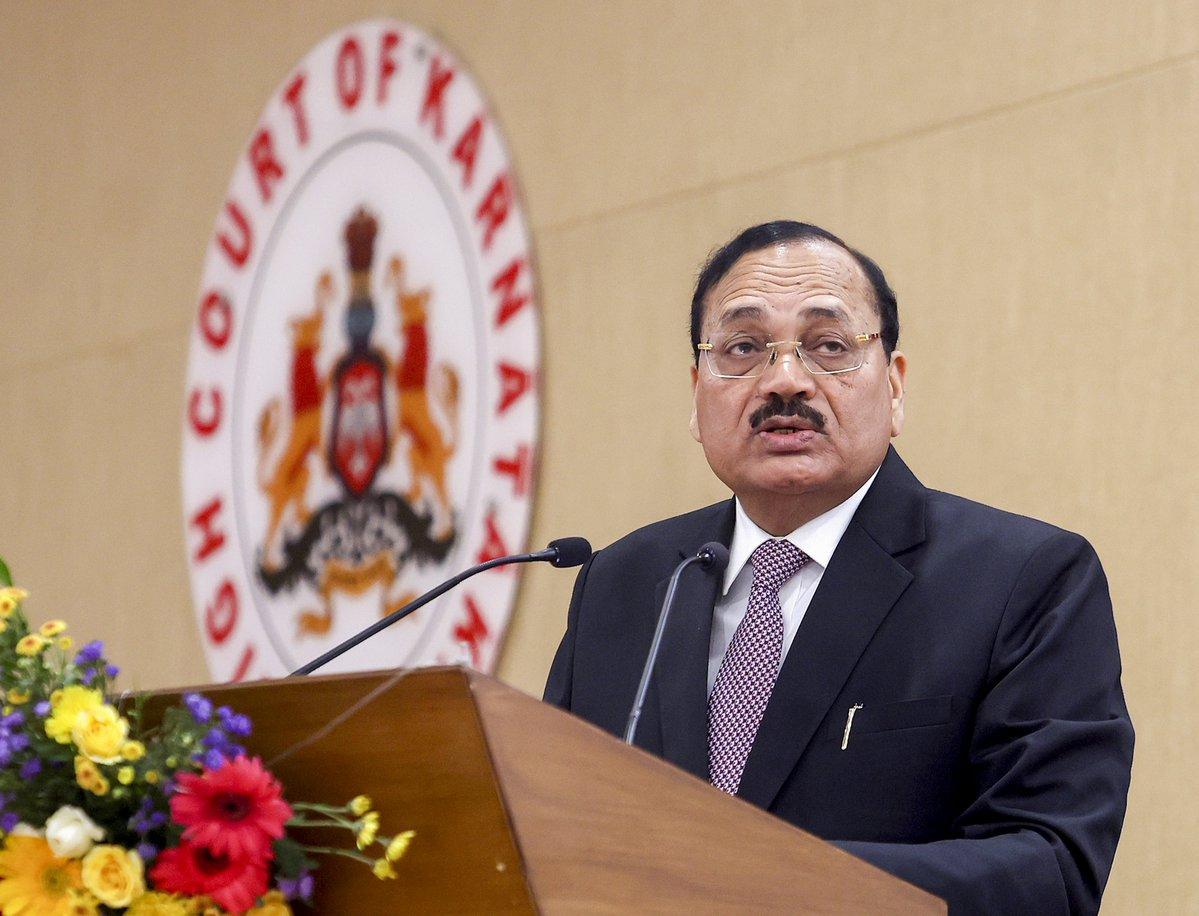
 BENGALURU, Mar 21: CJI Justice Surya Kant on Saturday underscored the need to transform "formal equality" into real, lived experiences for women in the legal profession, calling for structural reforms and sustained institutional support to ensure their continued participation and advancement. BENGALURU, Mar 21: CJI Justice Surya Kant on Saturday underscored the need to transform "formal equality" into real, lived experiences for women in the legal profession, calling for structural reforms and sustained institutional support to ensure their continued participation and advancement.
Speaking at the National Conference-2026 on "Reimagining Judicial Governance: Strengthening Institutions for Democratic Justice", organised by the Supreme Court Bar Association on the outskirts of Bengaluru, he highlighted key findings of a survey documenting the challenges faced by women lawyers and the need for systemic solutions.
"I personally believe that when we talk of equality within our constitutional framework, this equality is not merely on paper. So equality has to be translated into lived experiences," the Chief Justice said.
He lauded the survey prepared by women lawyers, describing it as "a very remarkable and a very scientific survey" and an "eye opener" that also provides a roadmap to identify challenges and solutions.
Describing the survey as a guiding framework, he said, "This report is a guidebook. It should hold as a smaller constitution for us," expressing confidence that sustained efforts would help eliminate gender discrimination and realise the constitutional promise of equality.
Pointing to encouraging trends, the Chief Justice noted that women now constitute over 50 per cent of students in law schools and a significant proportion of new entrants to the Bar. However, he flagged concerns about attrition. "The problem starts after that. Are we able to maintain that equality at the subsequent stages of progression in life, progress in professional life," he asked.
Emphasising the need to address structural barriers, he said stakeholders must identify impediments that prevent women from continuing in the profession. "Let us identify the issues, the challenges, the impediments, the roadblocks, which are eventually denying equality to women," he said.
Suggesting concrete measures, the Chief Justice called for enhanced representation of women in government panels and legal aid. "Let's not go by 30 per cent - at least 50 per cent women lawyers should be empanelled as government counsel," he said, adding that similar representation should be ensured in legal aid panels.
He said such steps would provide women lawyers with a platform and stability in their early years. "This is how you get a platform, an opportunity to show your work, the talent never hangs," he observed. |
