 Early Times Report Early Times Report
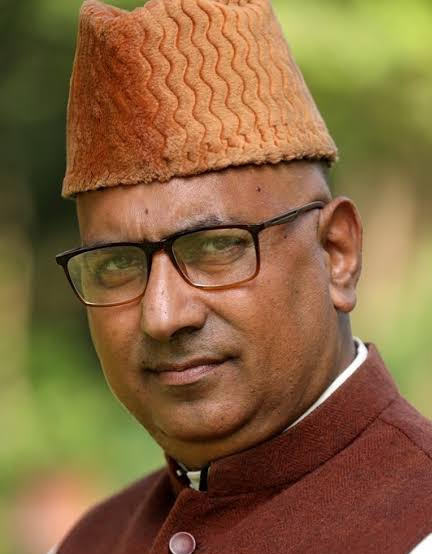
SRINAGAR, Mar 26: Senior BJP leader and Member of Parliament (Rajya Sabha Nominated), Er. Gulam Ali Khatana, raised an Unstarred Question (No. 3664) in the Rajya Sabha on March 24, 2026, seeking detailed information regarding the implementation of central renewable energy schemes in Jammu and Kashmir.
The question was addressed by the Minister of State for New & Renewable Energy and Power, Shripad Yesso Naik.
Key Highlights from the Government's Reply:
The Ministry informed that all renewable energy programmes being implemented in Jammu & Kashmir are Central Sector Schemes. Prominent among them are the PM Surya Ghar: Muft Bijli Yojana and PM-KUSUM scheme, aimed at promoting rooftop solar installations and solar energy use in agriculture.
Funds are released as per scheme guidelines rather than fixed state-wise allocation. Under major schemes:
Rs 1.20 crore (2022-23) and Rs 59.85 crore (2024-25) were released for rooftop solar/PM Surya Ghar scheme.
Rs 15.69 crore (2022-23) and Rs 12.90 crore (2024-25) were released under PM-KUSUM.
As of February 28, 2026, Jammu & Kashmir has a total installed renewable energy capacity of 3629.41 MW, including:
79.48 MW solar power
189.93 MW small hydro power
3360 MW large hydro power
A total of 26,730 households across the Union Territory have benefited under the PM Surya Ghar: Muft Bijli Yojana. The highest number of beneficiaries was reported from Srinagar district (4,538 households), followed by Jammu (3,881) and Kupwara (2,494).
The Government has undertaken several initiatives to promote renewable energy in remote and border districts, including higher Central Financial Assistance for special category regions like Jammu & Kashmir, expansion of green energy infrastructure, promotion of solar parks, and implementation of policies such as Renewable Purchase Obligations and Green Energy Open Access Rules.
Statement by Er. Ghulam Ali Khatana:
Er. Khatana emphasized the importance of accelerating renewable energy adoption in Jammu & Kashmir, particularly in far-flung and border areas, to ensure energy security, sustainable development, and economic growth. He reiterated the need for effective implementation and awareness of central schemes to maximize benefits for the people of the Union Territory. |
