| Khatana highlights CAPF bill fixes, slams Congress for years of neglect | | | 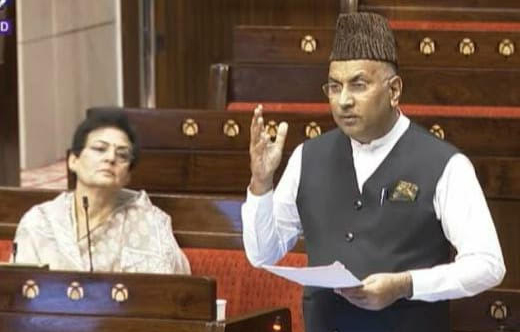 Early Times Report Early Times Report
NEW DELHI, Apr 2: The passage of the CAPFs Bill, 2026 in the Rajya Sabha marks a historic and much-needed reform in India's internal security architecture. Speaking during the debate, senior BJP leader and Member of Parliament Rajya Sabha Nominated, Er. Gulam Ali Khatana strongly articulated the transformative vision behind the bill and highlighted the stark contrast between past failures and present achievements. Er. Khatana emphasized that had the integration doctrines envisioned by Sardar Patel-ensuring coordination among IPS and Central Armed Police Forces (CAPFs)-been effectively implemented earlier, India could have significantly reduced the loss of lives caused by Pakistan-sponsored proxy wars and terrorism. From Punjab to Jammu & Kashmir, thousands of innocent civilians and security personnel paid the price for fragmented and reactive policies of previous governments.
He further pointed out that the unchecked spread of Naxalism across more than 200 districts was not inevitable, but rather the result of a lack of political will, poor coordination, weak intelligence sharing, and ad hoc governance approaches under earlier regimes, particularly Congress-led governments. Er. Khatana asserted that since 2014, under the leadership of Prime Minister Narendra Modi, India has witnessed a decisive shift. With a zero-tolerance policy toward terrorism, improved coordination among forces, and robust intelligence-sharing mechanisms, Jammu & Kashmir has moved from an era of unrest toward stability and development. Youth who were once involved in stone-pelting have returned to schools and playgrounds, while farmers and business communities have resumed normal economic activities.
Highlighting the success of the government's approach, he noted that the same security forces, when empowered with clear direction and coordination, have effectively uprooted Naxalism from large parts of the country.
Er. Khatana also reminded the House of tragic incidents such as the Nellie massacre, Muzaffarabad violence, Ahmedabad riots, Moradabad riots, Bhagalpur riots, and the 1984 Delhi Sikh riots-events that occurred under Congress governments and exposed severe failures in governance, coordination, and proactive response. These incidents resulted in massive loss of life and property, underscoring systemic weaknesses of the past. In contrast, he highlighted that under the current government, India has witnessed a significant decline in such large-scale communal violence, reflecting a shift toward proactive governance and firm law enforcement without appeasement.
The CAPFs Bill, 2026, he said, is a forward-looking reform that institutionalizes coordination, strengthens national security, and addresses long-standing structural issues, including promotion disparities between CAPFs and IPS officers. The bill aligns with the Supreme Court's 2025 judgment while ensuring a balanced approach to operational efficiency and personnel welfare.
Er. Khatana concluded by stating that this legislation reflects the government's commitment to a strong, secure, and united India-moving away from fragmented policies of the past toward a cohesive and decisive national security framework. |
|
