 Early Times Report Early Times Report
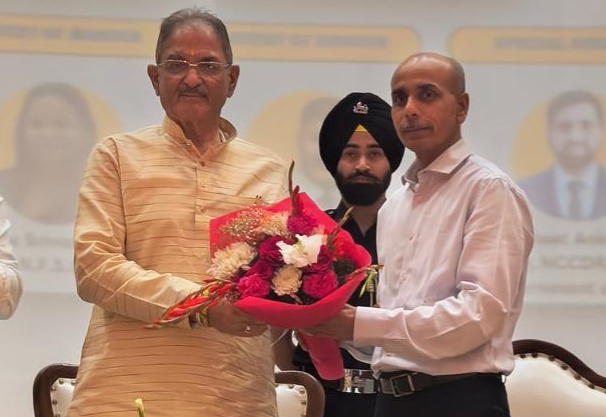
GREATER NOIDA (UTTAR PRADESH), Apr 9: The Governor of Himachal Pradesh, Kavinder Gupta today inaugurated the 51st National Conference on Clinical Psychology (NACIACP 2026) at Gautam Buddha University in Greater Noida.
The conference was presided over by the Vice-Chancellor of the University, Professor Rana P. Singh, and focused on the theme, "Role of Artificial Intelligence in Mental Health."
Addressing the gathering, the Governor, who was the Chief Guest, said that artificial intelligence has the potential to make mental health services more accessible, effective and personalized, enabling timely assistance and treatment for individuals in need. He observed that the use of artificial intelligence in medical science has significantly accelerated the processes of disease detection and treatment, making them more accurate and efficient.
Kavinder Gupta noted that stress, depression, anxiety and other psychological disorders are increasing rapidly in modern society, affecting people across all sections. In such circumstances, he said, artificial intelligence is opening new doors of hope and possibilities in the healthcare sector. He highlighted that several digital platforms and applications have already been developed that can analyze an individual's emotions, behavior and language patterns to identify mental health issues at an early stage, and these technologies are likely to become even more effective in the future.
The Governor further stated that the Government of India has taken several important initiatives to strengthen mental healthcare services. He referred to programmes such as the Tele-MANAS, which are helping extend mental health services to remote and underserved regions of the country. He emphasized that mental health is not merely a medical issue but also a matter of social sensitivity and collective responsibility.
"Under the leadership of Prime Minister Narendra Modi, the Government of India is bringing unprecedented transformation in the fields of digital health and mental healthcare. Through the 'Digital India' initiative, healthcare services are being integrated with technology while promoting the use of artificial intelligence, ensuring that quality mental health services reach even the remotest parts of the country. Owing to the Prime Minister's visionary approach, tele-mental health services, digital platforms and innovation-driven initiatives are making the lives of citizens simpler and more secure, marking a significant step towards building a 'New India'," he added.
Gupta underscored the need to integrate mental health services more effectively with existing healthcare schemes to ensure timely support for every individual. He also stressed the importance of launching widespread awareness campaigns to eliminate the social stigma associated with mental health. He remarked that artificial intelligence-based technologies can play a significant role in spreading awareness and providing assistance, particularly in areas where mental health professionals are scarce.
He added that artificial intelligence is also being used in areas such as neurofeedback, brain imaging and data analysis to better understand mental disorders and develop new treatment possibilities. However, he cautioned that artificial intelligence is only a supportive tool and cannot fully replace human sensitivity, empathy and the personal touch that are essential in mental healthcare. He emphasized the need to pay special attention to critical issues such as data privacy, ethics and security while adopting AI-driven solutions.
The Governor expressed confidence that if artificial intelligence is used in the right direction and guided by human values, it can play a transformative role in making mental health services more robust, accessible and effective. |
