news details |
|
|
| ‘Aftershocks’ will be felt till 2029: Omar terms Bengal, Tamil Nadu results as “political earthquakes” | | | 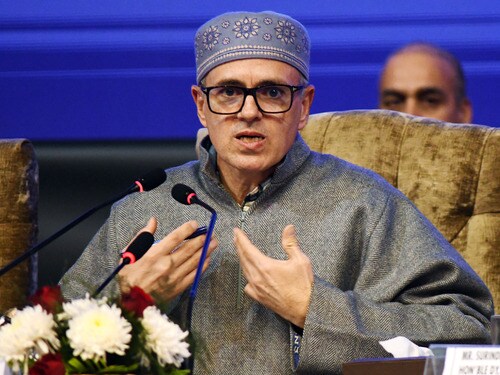 Early Times Report Early Times Report
Jammu, May 4: Chief Minister Omar Abdullah on Monday termed the unfolding results of the five-state Assembly elections as a watershed political moment, highlighting dramatic trends emerging from across the country, particularly in West Bengal and Tamil Nadu.
As counting progressed in West Bengal, Tamil Nadu, Assam, Kerala and Puducherry, early trends pointed to a decisive churn in voter preferences, with incumbents facing stiff challenges and new political forces making significant gains. Abdullah, reacting to these developments, said such elections demand “sane and sensible interpretation,” recalling the analytical legacy of veteran psephologist Prannoy Roy. He noted that he was closely following the results through DeKoderAI.
The most striking developments have emerged from West Bengal, where trends indicate a major surge for the Bharatiya Janata Party (BJP), potentially ending years of dominance by the Trinamool Congress. Early leads suggested the BJP crossing the majority mark with a commanding advantage in over 190 seats, while the ruling party lagged far behind.
In Tamil Nadu, the political landscape has witnessed an equally dramatic upheaval. Actor-turned-politician Vijay’s Tamilaga Vettri Kazhagam (TVK) has emerged as a formidable force, leading in a substantial number of constituencies and outpacing traditional players like the DMK and AIADMK. In a stunning These results collectively indicate a break from entrenched voting patterns.
Voters across regions have demonstrated willingness to reject incumbency and experiment with new political alternatives.
The emergence of new players, coupled with setbacks for established regional leaders has added an element of unpredictability to the electoral landscape.
Implications of these results would extend well beyond the immediate electoral cycle.
Across the other states, mixed trends have added to the broader narrative of change. Assam has shown continued strength for the BJP, while Kerala appears to be witnessing a swing back towards the Congress-led United Democratic Front (UDF). Puducherry, too, has reflected competitive contests with multiple parties in the fray.
Analysts note that these results collectively indicate a break from entrenched voting patterns, with voters across regions demonstrating a willingness to reject incumbency and experiment with new political alternatives. The emergence of new players, coupled with setbacks for established regional leaders, has added an element of unpredictability to the electoral landscape.
Describing the developments as a “political earthquake,” Abdullah said the implications of these results would extend well beyond the immediate electoral cycle. “The aftershocks will be felt far and wide for a long time, possibly shaping national political alignments leading up to 2029,” he observed.
With counting still underway and final results awaited, the trends from these five states are already being seen as a defining moment in India’s evolving political trajectory, potentially redrawing the contours of both regional and national politics. |
|
|
|
|
|
|
|
|
|
|
|
|
| |
| |
|
|
|
|
 |
|
|
