| Over 600 prisons overcrowded in country; J&K jails house 5,383 inmates against capacity of 3,629 | | | 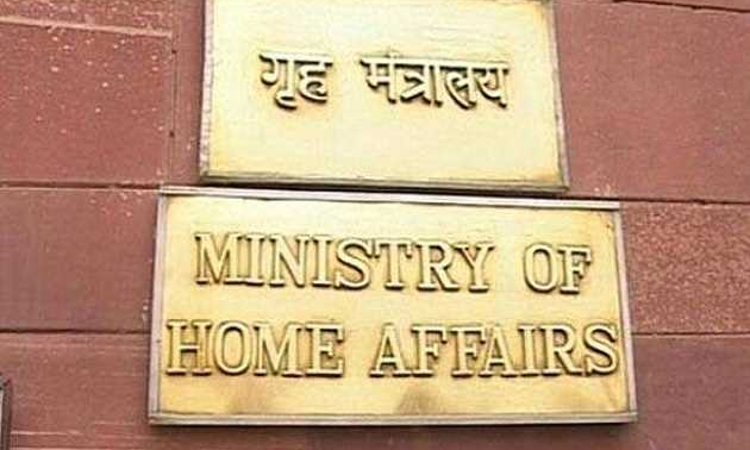 Atul Sharma Atul Sharma
Early Times Report
Jammu, Aug 5: More than 600 prisons across India were operating beyond their sanctioned capacity at the end of 2024, highlighting the persistent problem of overcrowding in the country's correctional system despite sustained efforts to modernise prison infrastructure.
According to information shared by the Ministry of Home Affairs (MHA) in the Rajya Sabha, 609 prisons were functioning beyond their authorised capacity as on December 31, 2024. Across the country, prisons with a total sanctioned capacity of 4,53,769 inmates housed 5,11,542 prisoners, reflecting an occupancy rate of nearly 113 per cent.
In Jammu and Kashmir, overcrowding remains a significant concern. Against an authorised capacity of 3,629 inmates, the Union Territory's prisons housed 5,383 prisoners as on December 31, 2024, translating into an occupancy rate of about 148 per cent.
The data further showed that overcrowding in J&K prisons has steadily increased over the years. The actual inmate population rose from 4,105 in 2020 to 4,970 in 2021, 5,314 in 2022, 5,400 in 2023, and 5,383 in 2024, while the sanctioned capacity remained almost unchanged at around 3,600 inmates.
Responding to an unstarred question in the Rajya Sabha, the Ministry said that prison administration and the management of inmates fall under the jurisdiction of States and Union Territories under Entry 4 of List II of the Seventh Schedule to the Constitution. Consequently, the responsibility for expanding prison capacity through the construction of new jails and the augmentation of existing facilities rests with the respective State and UT governments.
The Ministry informed Parliament that it had released Rs 608.6 crore to States and Union Territories over the last five financial years under the Modernisation of Prisons Project. The funds have been utilised for the construction of high-security prisons, strengthening prison security infrastructure, and improving correctional administration through skill development, rehabilitation, and other inmate welfare initiatives.
On concerns over the impact of overcrowding on prisoners' rights, healthcare, legal aid, and rehabilitation, the Ministry said these issues are primarily the responsibility of the States and Union Territories. However, the Centre has supplemented their efforts by sharing the United Nations Standard Minimum Rules for the Treatment of Prisoners (Nelson Mandela Rules) to promote humane treatment of inmates.
The Ministry also circulated the Model Prison Manual, 2016 to all States and Union Territories as a guiding framework for prison administration. The manual provides detailed guidelines on prison management, including healthcare, legal aid, vocational training, rehabilitation, after-care, and the reintegration of prisoners into society.
Among major States and Union Territories, Uttar Pradesh had the largest prison population with 86,762 inmates against a capacity of 76,162, while Delhi's prisons housed 19,512 inmates against a sanctioned capacity of 10,026. Punjab recorded 30,663 inmates against a capacity of 26,543, and Maharashtra had 39,003 inmates against a capacity of 27,110.
The Ministry reiterated that addressing prison overcrowding through capacity expansion and ensuring humane prison conditions remains the responsibility of individual States and Union Territories, with the Centre continuing to provide financial and policy support. |
|
