 Early Times Report Early Times Report
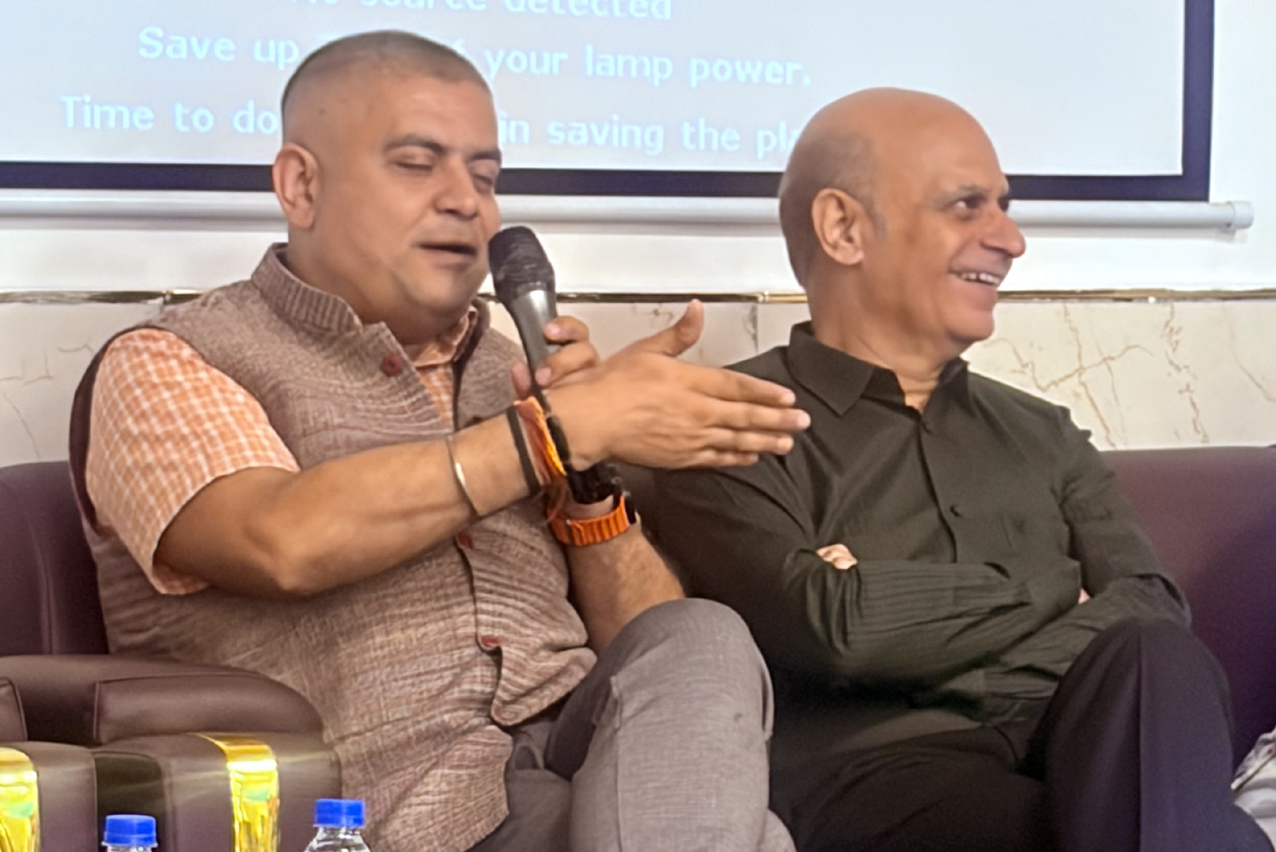
JAMMU, May 27: Amit Sharma, IAS, Chief Principal Census Officer (CPCO) and Director Census Operations (DCO), Jammu & Kashmir and Ladakh, yesterday delivered a keynote talk and interactive session on "Census 2027 and its Implications for the Healthcare Sector" at Government Medical College (GMC), Jammu wherein he termed Enumerators and Supervisors as the wall for successful conduct of Census 2027 operations who shall ensure clean, transparent completion in both the UTs of J&K and Ladakh. During the talk, CPCO Amit Sharma highlighted the growing importance of Census data in strengthening healthcare planning, evidence-based policy formulation and targeted public health interventions, particularly in rapidly evolving demographic and socio-economic environments.
The talk was conducted on the request of Dr Ashutosh Gupta, Principal - Government Medical College Jammu for awakening medicos about this important ongoing national activity wherein Administrator GMC & Associated Hospitals Deep Raj, lot of Heads of Departments, senior faculty members, doctors, researchers, medical and paramedical staff and healthcare professionals associated with the institution attended this exclusive programme. Officers from the Directorate of Census Operations, Jammu & Kashmir and Ladakh including Manmeet Singh Loomba, Deputy Chief Principal Census Officer, and Shri Jatinder Kumar, Assistant Chief Principal Census Officer, were also present alongwith CPCO in this important talk.
CPCO Amit Sharma gave a detailed overview of Census 2027 and described it as India's first fully digital and paperless Census exercise incorporating several technology-driven features including Self-Enumeration, mobile-based digital data collection, geo-referenced mapping, real-time monitoring systems and the Census Management and Monitoring System (CMMS).
Explaining the direct relevance of Census data to the healthcare sector, stated that Census remains the most authentic and comprehensive source of demographic and socio-economic information required for healthcare administration, disease surveillance, health infrastructure planning and implementation of welfare programmes.
He elaborated that data relating to age, literacy, migration, occupation, housing conditions and household amenities enables governments and healthcare institutions to plan hospitals, health centres, vaccination drives, nutrition programmes, maternal and child healthcare services and disease-control strategies in a more targeted and scientific manner.
CPCO Amit Sharma further highlighted that Census data serves as the denominator for critical health indicators including birth rates, death rates, fertility trends, disease prevalence and population-based health assessments. He stated that accurate Census data helps identify vulnerable populations, underserved regions and healthcare disparities, thereby supporting equitable healthcare delivery and efficient allocation of resources.
During the interaction after conclusion of talk, Amit also sensitised the participants regarding the Self-Enumeration facility introduced for the first time in Census history and encouraged doctors, medical students and healthcare workers to actively participate in the ongoing Self-Enumeration exercise through the official portal (https://se.census.gov.in) and motivate citizens to furnish accurate and transparent information during Census operations.
The session also covered various digital tools being deployed for Census 2027 including the HLO Mobile App, Self-Enumeration Portal, HLBC Web Mapping Application and CMMS Portal, besides the multi-tier security architecture and data protection mechanisms adopted for secure digital Census operations.
Amit Sharma also highlighted the confidentiality safeguards available under the Census Act, 1948, particularly Section 15 relating to protection and privacy of Census records, and assured that all information collected during Census operations remains completely confidential. |
