news details |
|
|
| Remembering Gandhiji as An environmentalist with a difference | | | 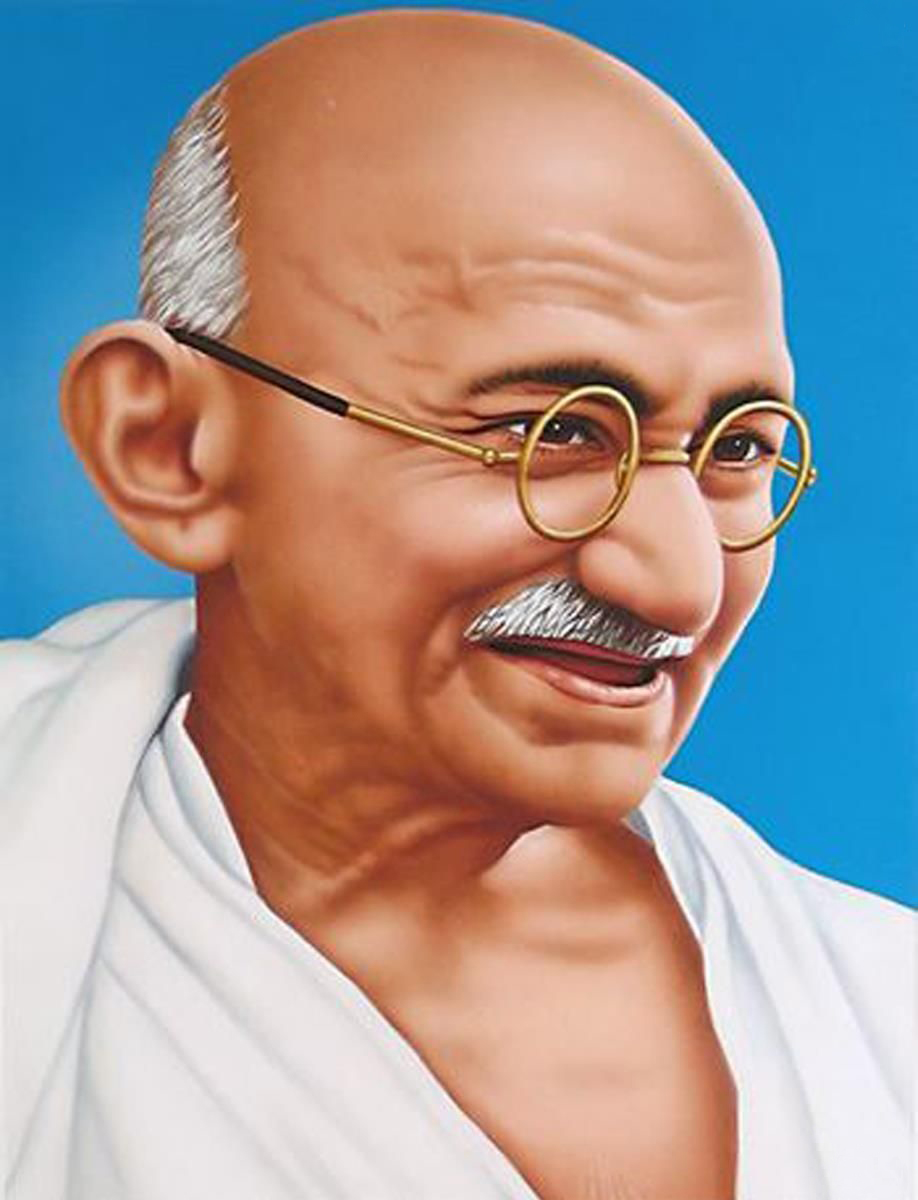 Sunil Vaid Sunil Vaid
GENERATION TO COME WILL SCARCELY BELIEVE THAT SUCH A ONE AS THIS EVER IN FLESH AND BLOOD WALKED UPON THIS EARTH- ALBERT EINSTEIN
30th January is the date observed as Martyr’s day in the national level to pay homage to honor the sacrifices made by Mahatma Gandhi and countless other brave Indians for their motherland. The day is to mark the assassination of Mohandas Karamchand Gandhi in 1948. On Martyr’s day, the President, the vice-president, the Prime minister, the defense minister and three service chiefs gather at the Samadhi at Raj-ghat memorial and lay wreaths decorated with multicolor flowers. The armed forces personnel blow bugles sounding the last post. The inter-services contingent reverses arms as a mark of respect. A two-minute silence in memory of Indian martyrs is observed throughout the country at 11am. Participants hold all religion prayers and sing tributes.
Mohandas karamchand Gandhi was born on October2, 1869, at Porbandar, in the present-day Indian state of Gujrat. His father was Dewan of Porbandar, his deeply religious mother Putlibhai was devoted practitioner of Vaishanvism(Worship of Hindu Lord Vishnu).At the age of 19,Mohan dass left home to study law in London at the inner temple, one of the city’s four Law colleges. Upon returning to India in mid -1891, he set up a Law practice in Bombay, but met with little success. He soon accepted a position with an Indian firm that sent him to its office in South Africa. Along with his wife Kasturba and their children, Gandhiji remained in South Africa for nearly 20 years.
Gandhi ji was appalled by the discrimination he experienced as Indian and fought for civil rights in South Africa. He returned to India in 1915. His popularity in South Africa made him an instant hero in India. Indian politicians started calling him in meetings and gatherings. He soon became a member of the Indian National Congress. Because of his fight for India’s Independence, Neta Ji Subhash chander Bose gave him the name of ‘Father of the nation’. Also we call him ‘Bapu’ in India.
The contribution of Mahatma Gandhi towards the nation and its independence is no secret. He was a great freedom fighter who taught the lesson of non-violence and worked on building the unity of the nation which was broken by the British. After India got independence in 1947, Bapu stayed away from politics and started working on harmony, peace and brotherhood among the people.
The whole world knows that Gandhi ji was a politician and a revolutionary of an extraordinary type. That he was a great thinker and a saintly figure well known all over the World. It is widely known that he was a humanist and a pacifist of international fame. But very few people know that he was a environmentalist too. That was primarily because the environmental problems have surfaced largely in the post Gandhian era and as such, the concern for environment has assumed importance only in recent years. Nevertheless there were people in the past too who could fore see the future and visualize the dangers inherent in the kind of development the nations chose to go in for following the industrial revolution in the West, Gandhi ji was such a person.
This is precisely the reason of his condemnation and rejection of graphic description of the consequences of madness of urbanization. Finally Gandhi ji believed that a good life can be lived only in small communities. To him big cities were centers of corruption and kind of vices. So, he advocated village life throughout. He solely believed that India lived in villages. It is a life of innate simplicity in close proximity with Mother Nature.
The real importance of Gandhi ji as an environmentalist lies not in his vision but his right understanding of man- nature relationships. He made honest efforts to translate his principles in actual life. Even before he became an international fame & Mahatma he patterned his life and that of a small community on these ideals. His Phoenix and Tolstoy’s farms testify to it. In India too he established ashrams on that pattern.
He did eulogized the village but he was pained to see the poverty, Illiteracy and unsanitary Conditions in Indian villages. Therefore, he kept on advocating and giving demonstrations on health, hygiene and sanitation. Hardly any political leader of his stature had ever devoted so much of time and energy on these problems with sincerity and dedication. He tried to carry the message to the masses the life he himself led. That is why he was an environmentalist with a difference. By following the Mahatma, adopting his ideals, philosophy and his doctrine on cleanliness, hygiene and sanitation, we may of course bid adieu to all problems faced by the World and the ghost of covid-19.
No one could die a more glorious death than Mahatma Gandhi. He was going to the seat of his prayer to speak to his Rama.He did not die in the bed calling for hot water, doctors or nurses. He did not die after numbing incoherent words in the bed. He died standing, not even sitting down with last words “HEY RAM”.Rama was too eager to take him even before he could reach the seat of his prayer. |
|
|
|
|
|
|
|
|
|
|
|
|
| |
| |
|
|
|
|
 |
|
|
